Nintendo Switch 2 Review vs the Competition: Which Portable Console Should You Buy in 2025?
Portable gaming in 2025 has become one of the most dynamic segments of the tech industry. No longer an afterthought, handheld systems are competing directly with traditional consoles and gaming PCs. Nintendo’s Switch 2 sits at the center of this evolution, promising to refine its hybrid design with modern display tech, better performance, and a refreshed ecosystem of exclusives. At the same time, competitors like Valve, ASUS, and Sony are redefining what “portable” means with powerful PC-based devices and cloud-first streaming handhelds.
The market is now broader and more complex than ever. On one end, family-friendly consoles such as the Switch 2 deliver wide accessibility, portability, and must-have exclusives. On the other, devices like the Steam Deck OLED and ROG Ally offer uncompromised PC performance in your hands, albeit with trade-offs in portability and battery life. Meanwhile, Sony’s PlayStation Portal is carving out its own lane, targeting gamers who want to extend the PS5 experience beyond the living room without buying another console.
For buyers, the challenge isn’t whether to go handheld—it’s which device fits their lifestyle and priorities best. Do you want Nintendo’s unmatched first-party lineup? A portable machine that doubles as a PC? Or perhaps a budget-friendly way to continue playing console titles throughout your home? This review dives deep into the four major contenders of 2025 to help you make the right choice.
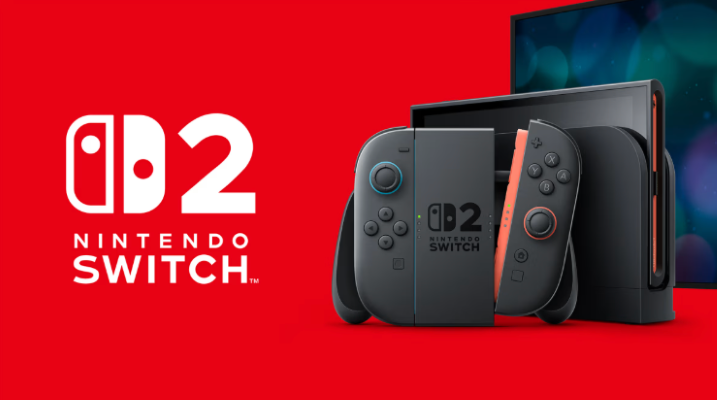
Contenders at a Glance
| Product | Price (AUD) | Key Specs | Screen Size & Type | Resolution & Refresh | Battery Life | Weight | Strengths | Weaknesses | Best For | Store Link |
|---|---|---|---|---|---|---|---|---|---|---|
| Nintendo Switch 2 | $697 | Hybrid handheld/console, custom Nvidia chip | ~7–8" OLED | 1080p handheld, 4K docked (est.) | 5–9 hrs | ~350g | Nintendo exclusives, hybrid design | Lower raw power vs PC handhelds | Families, casual gamers | Buy on Amazon |
| Valve Steam Deck OLED | $989 | AMD APU, SteamOS, mod support | 7.4" OLED | 800p, 60Hz | 3–8 hrs | ~640g | Steam library, modding, OLED screen | Bulky, variable endurance | PC gamers | Buy on Amazon |
| ASUS ROG Ally | $1,391 | AMD Z1 Extreme, Windows 11 | 7" IPS LCD | 1080p, 120Hz | 2–7 hrs | ~608g | Windows compatibility, Game Pass | Weak battery, Windows UI | Hardcore gamers | Buy on Amazon |
| Sony PlayStation Portal | $322 | PS5 streaming-only | 8" LCD | 1080p, 60Hz | 4–6 hrs | ~540g | Affordable, DualSense controls | No standalone play | PS5 owners | Buy on Amazon |
Reviews – Let’s Take a Closer Look
Nintendo Switch 2
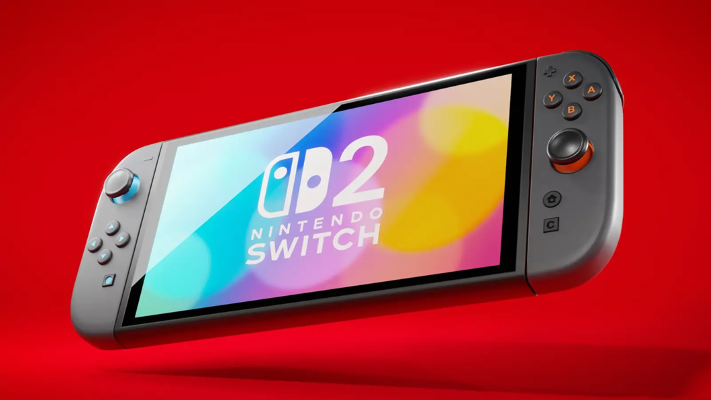
Pros
- Hybrid docked/handheld design
- Strong lineup of exclusives (Mario, Zelda, Pokémon)
- 1080p OLED handheld with expected 4K docked support
Cons
- Less powerful than PC handhelds
- Launch price higher than original Switch
Nintendo’s Switch 2 brings a more polished iteration of its hybrid console concept. With an OLED panel offering 1080p handheld visuals and expected 4K output when docked, it balances modern display expectations with portability. Its custom Nvidia processor emphasizes efficiency and stability over brute force, which keeps the system approachable and compact.
The standout factor remains Nintendo’s unmatched game ecosystem. With staples like Mario, Zelda, and Pokémon, the Switch 2 secures broad family and casual gamer appeal. The device’s portability also makes it the easiest option for travel or on-the-go play, particularly compared to the heavier PC handhelds.
That said, performance-focused players may find the Switch 2 underwhelming. Unlike Windows-powered handhelds, it won’t run the latest AAA titles at high frame rates or support mods. Yet, its comparatively lower price and broader mainstream design make it the most accessible entry point into handheld gaming in 2025.
Summary: A hybrid system that thrives on accessibility and exclusives.
Best for: Families, casual players, and long-time Nintendo fans.
| Product | Price (AUD) | Store Link |
|---|---|---|
| Nintendo Switch 2 | $697 | Buy on Amazon |
Valve Steam Deck OLED
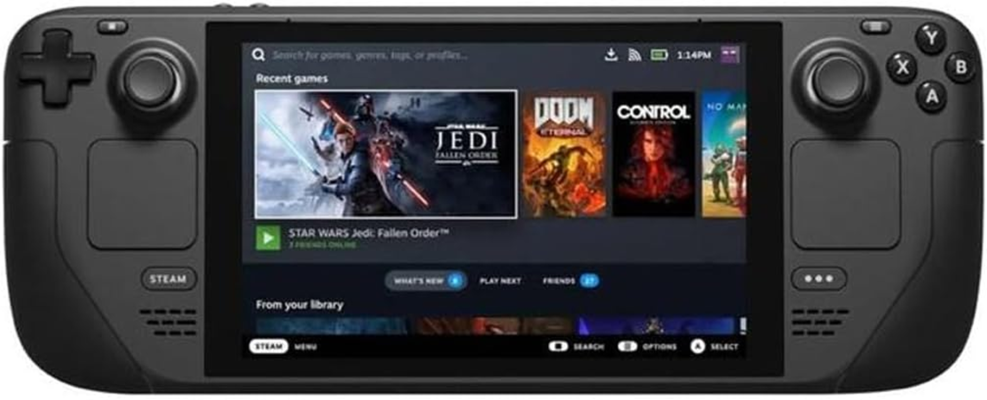
Pros
- Gorgeous OLED display
- Full Steam library support
- Modding and emulation flexibility
Cons
- Heavy form factor
- Battery drain on AAA titles
The Steam Deck OLED improves on Valve’s first attempt by upgrading its display, cooling, and ergonomics. The vivid OLED panel adds color vibrancy and deeper contrast, making it a standout for visually rich games. SteamOS creates a console-like interface that still preserves the freedom of PC gaming, giving users the ability to install mods, alternate operating systems, and even emulators.
Where it struggles is portability. At ~640g, the Deck is noticeably heavier than both the Switch 2 and Portal, making it less travel-friendly. Battery endurance is also inconsistent—indie games can stretch to 6–8 hours, but demanding AAA titles often fall below 3.
Despite these trade-offs, the Steam Deck OLED stands out as a flexible option for gamers deeply embedded in the PC ecosystem. With access to the full Steam library and the ability to extend functionality through customization, it appeals to players who value openness over streamlined usability.
Summary: A powerful, mod-friendly handheld for PC gamers.
Best for: Steam users who want freedom and flexibility.
| Product | Price (AUD) | Store Link |
|---|---|---|
| Valve Steam Deck OLED | $989 | Buy on Amazon |
ASUS ROG Ally
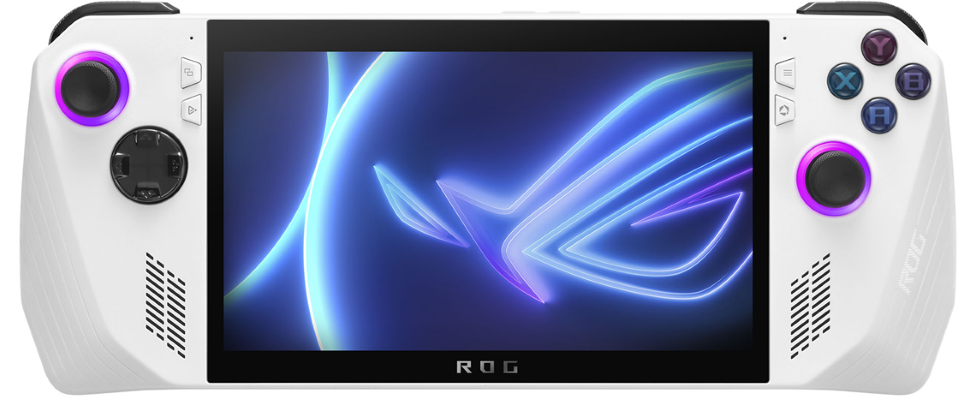
Pros
- High-performance AMD Z1 Extreme chip
- 120Hz refresh rate for fluid visuals
- Runs Windows 11 for maximum compatibility
Cons
- Weak endurance under heavy load
- Windows UI not optimized for handheld use
The ROG Ally is ASUS’s flagship entry into handheld gaming, prioritizing raw performance above all else. Powered by the AMD Z1 Extreme, it delivers desktop-like gaming in portable form. The 120Hz panel enhances responsiveness, offering smoother visuals than most competitors, which makes it particularly appealing to enthusiasts who want uncompromised gameplay.
The inclusion of full Windows 11 is both a blessing and a curse. On one hand, it allows access to all PC launchers, including Steam, Epic, and Game Pass. On the other, Windows is not optimized for handheld navigation, which can lead to clunky experiences and frequent tweaks. Combined with power-hungry fans, battery endurance often drops to just 2–3 hours in demanding titles.
Its higher cost also makes it the least accessible option of the bunch. Still, for PC enthusiasts who demand maximum flexibility and raw capability in a portable system, the ROG Ally is unmatched in sheer technical prowess.
Summary: A powerhouse handheld for enthusiasts.
Best for: Hardcore gamers seeking uncompromised performance.
| Product | Price (AUD) | Store Link |
|---|---|---|
| ASUS ROG Ally | $1,391 | Buy on Amazon |
Sony PlayStation Portal
Pros
- Affordable entry price
- DualSense features built-in
- Seamless PS5 streaming
Cons
- No standalone functionality
- Wi-Fi quality impacts performance
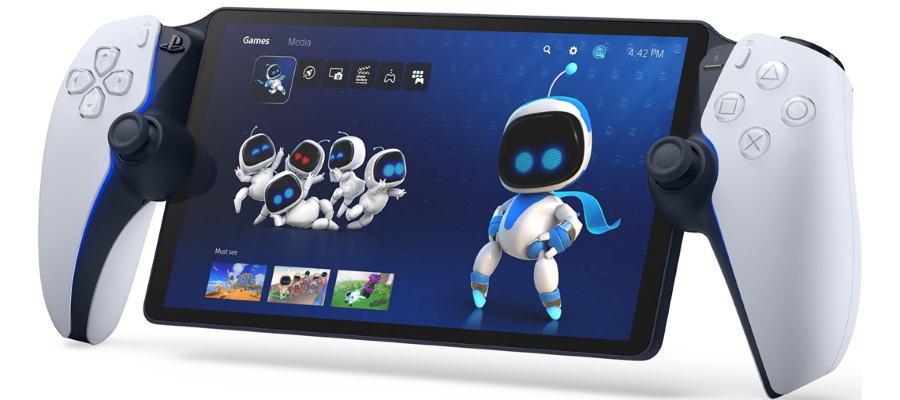
Sony’s PlayStation Portal is a niche device that exists to complement, not replace, the PlayStation 5. With an 8-inch LCD and integrated DualSense controls, it brings console-quality streaming to every room of your house. The tactile feedback and adaptive triggers enhance immersion, offering the same feel as a DualSense controller.
Affordability is its biggest strength. At just $328, it’s the least expensive of the four options reviewed here. For existing PS5 owners, it provides an easy way to keep gaming when the main TV is unavailable. However, its heavy reliance on Wi-Fi means performance varies, and without a PS5 it has no independent utility.
This makes the Portal a specialist device. It isn’t meant for travelers or those without a PlayStation—it’s designed for households that already run on Sony’s ecosystem. Within those parameters, it delivers excellent value and a smooth user experience.
Summary: A companion device that enhances the PS5 ecosystem.
Best for: PlayStation owners extending their gaming reach.
| Product | Price (AUD) | Store Link |
|---|---|---|
| Sony PlayStation Portal | $322 | Buy on Amazon |
Conclusion
The handheld gaming market has diversified to the point where each device serves a distinct audience. The Nintendo Switch 2 continues to dominate the mainstream segment with its hybrid form factor, polished ecosystem, and strong library of exclusives. It isn’t the most powerful, but it balances cost, portability, and usability in a way that makes it the best overall option for most players.
The Valve Steam Deck OLED appeals to PC gamers who value openness. Its OLED screen and flexibility make it a compelling choice, though its weight and inconsistent battery mean it’s less convenient for travel or casual sessions.
On the high-performance end, the ASUS ROG Ally is the device of choice for enthusiasts. It offers the closest experience to a gaming laptop in handheld form, but compromises in endurance and pricing limit its broader appeal. It’s best suited for those who want cutting-edge tech and are willing to pay for it.
Finally, the Sony PlayStation Portal stands apart. It’s not trying to compete on specs—it’s a peripheral designed to extend the PlayStation 5 experience throughout the home. While it lacks standalone capability, its price and simplicity make it a fantastic companion device for existing PS5 owners.
Taken together, the decision comes down to ecosystem, priorities, and budget. For most buyers, the Switch 2 remains the best all-rounder. PC gamers and power users will prefer Valve or ASUS’s offerings, while PlayStation households will find great value in Sony’s Portal.
Recommendations
| Product | Best For | Price (AUD) | Store Link |
|---|---|---|---|
| Nintendo Switch 2 | Best for most people | $697 | Buy on Amazon |
| Valve Steam Deck OLED | Best for PC gamers | $989 | Buy on Amazon |
| ASUS ROG Ally | Best for hardcore enthusiasts | $1,391 | Buy on Amazon |
| Sony PlayStation Portal | Best for PlayStation owners | $322 | Buy on Amazon |
Sources
Show
Hide
Frequently Asked Questions
Q1. Will the Nintendo Switch 2 play original Switch games?
Yes, it offers full backward compatibility with the original Switch library.
Q2. Is the Steam Deck OLED available in Australia?
Official distribution is limited, but imports and Amazon listings are available.
Q3. Can the ROG Ally X run Windows games natively?
Yes, it runs Windows 11 out of the box, allowing full PC gaming.
Q4. Does the PlayStation Portal work without a PS5?
No. It requires a PS5 console for Remote Play functionality.
Q5. Which handheld has the best display?
The Nintendo Switch 2 OLED and Steam Deck OLED both offer excellent contrast and vivid colours.
Q6. Which device has the longest battery life?
The Switch 2 and PlayStation Portal typically last 6–8 hours, longer than the ROG Ally X and Steam Deck OLED.
Q7. Which console is best for kids?
The Switch 2, with its family-friendly titles and hybrid form factor, is the best choice.
Q8. Which is the most powerful?
The ROG Ally X leads in raw performance thanks to its AMD Z1 Extreme APU.
Q9. Which handheld is the cheapest?
The PlayStation Portal is the most affordable at $322 AUD, but requires a PS5.
Q10. Which console has the most games?
Steam Deck OLED offers access to Steam’s vast PC library, while the Switch 2 dominates in exclusives.
What’s Coming?
The handheld space will see important updates through 2025. A Steam Deck 2 is widely expected, with upgraded performance and energy efficiency that could directly rival the Switch 2 and ROG Ally X. ASUS is also exploring refinements to the Ally line, potentially improving battery endurance and cooling, which would address two of the Ally X’s biggest compromises. Nintendo is almost certain to launch themed or limited-edition Switch 2 consoles, building on its tradition of collector appeal without altering the core hardware.
Sony is experimenting with handheld connectivity, and future iterations of the PlayStation Portal may expand beyond Remote Play, giving it a more independent role. Each of these moves could shift how gamers weigh exclusives, performance, and versatility, making the handheld race even closer in the coming year.